
Staircase Calculator
Designing stairs can be complicated. A staircase calculator makes it simple by accurately computing rise, riser, run, tread, and stair angle. Whether you are a DIY enthusiast, homeowner, or professional carpenter, this tool ensures your staircase is safe, comfortable, and fully compliant with building codes.
For expert inspiration, explore modern staircase construction ideas that blend style and safety seamlessly.
Steps to Use Our Staircase Rise and Run Calculator
Getting precise stair measurements is fast and easy:
- Measure Total Rise: Record the vertical distance from the lower floor to the upper floor.
- Set Desired Riser Height: Most residential stairs use 7–8 inches for comfort.
- Calculate Number of Steps: Divide total rise by the riser height to get the exact number of steps.
- Determine Tread Depth: The horizontal distance for each step, ensuring comfort and safety.
- Check Stair Angle: Ensures your stairs are safe and comfortable to climb.
This method eliminates guesswork, making DIY stair projects faster and safer. For practical guidance, see step-by-step stair construction guide to get started.
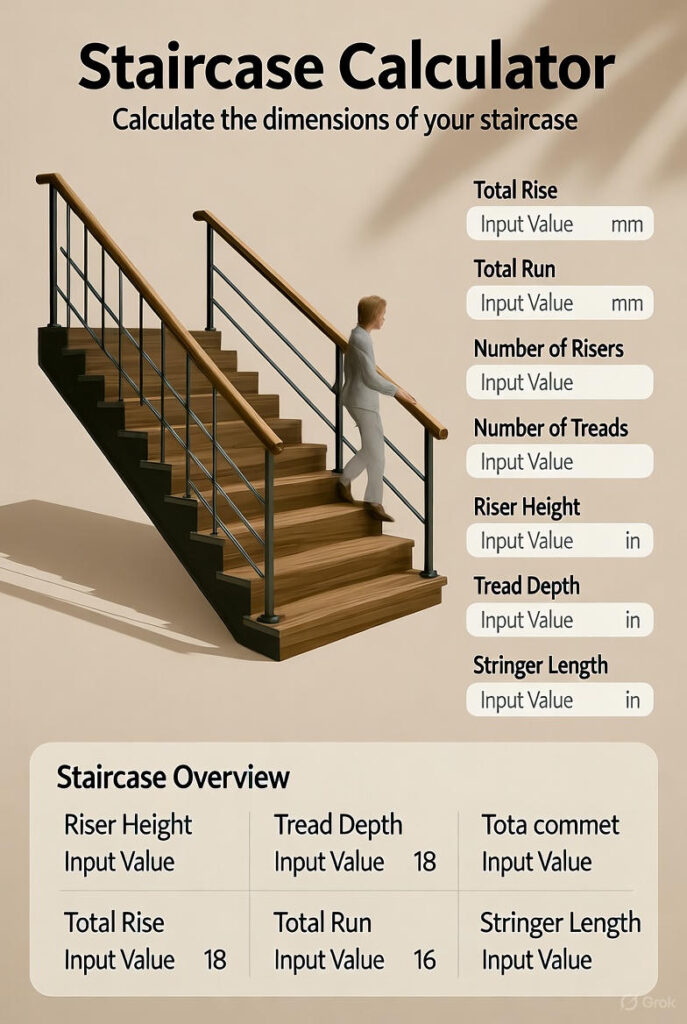
Essential Stair Terms You Must Know
Accurate stair planning starts with understanding key terminology:
- Rise: Total vertical height of the staircase
- Riser: Vertical part of an individual step
- Run: Horizontal distance covered by the staircase
- Tread: Horizontal surface of each step
- Stringer: Structural support along the sides of stairs
- Stair Angle: Angle formed between staircase and floor
Types of Stairs You Can Plan
Our calculator focuses on straight stairs, the most common type in homes and commercial spaces. While L-shaped, U-shaped, and Winder stairs exist, this tool prioritizes accuracy for straight designs, giving precise rise, run, tread, and angle results.
Stair Safety and Building Codes You Can’t Ignore
Follow these guidelines to ensure safe and comfortable stairs:
- Riser Height: 7–8 inches for residential stairs
- Tread Depth: 10–11 inches for comfort
- Stair Angle: Ideally between 30°–37°
Failing to adhere to these standards can lead to unsafe stairs. Always check local building codes before starting your project.
Benefits of Using a Staircase Calculator
- Saves Time: Instantly get precise measurements without manual calculations
- Reduces Errors: Avoid costly mistakes and ensure code compliance
- Perfect for DIY & Professionals: Plan your stairs accurately for any project
Using this tool helps you visualize dimensions before cutting materials, saving both money and effort.
Tips for Accurate Stair Measurements
- Measure total rise and run carefully
- Adjust riser heights for comfort and code compliance
- Ensure tread depth aligns with stair angle
- Double-check all measurements before cutting any materials
- Double-check results to meet building codes – check official stair code standards.
Frequently Asked Questions (FAQs)
Q1: How many steps will my staircase need?
A: Divide the total rise by your chosen riser height. The calculator provides the exact number of steps.
Q2: Can this calculator handle custom stair designs?
A: It’s optimized for straight stairs. For L-shaped or Winder stairs, additional planning is needed.
Q3: What is the ideal stair angle?
A: Most comfortable stair angles range between 30°–37°.
Conclusion – Design Your Stairs with Confidence
A staircase calculator is essential for anyone planning stairs. Accurately calculate rise, riser, run, tread, and stair angle to ensure your staircase is safe, comfortable, and code-compliant. Start using our free online staircase calculator today and design your stairs with confidence!
Explore Relevant Stair Calculators
Stair Shape & Layout Calculators
Material-Based Calculators
Outdoor & Deck Stairs
General Stair Calculators
Construction & Geometry Calculators